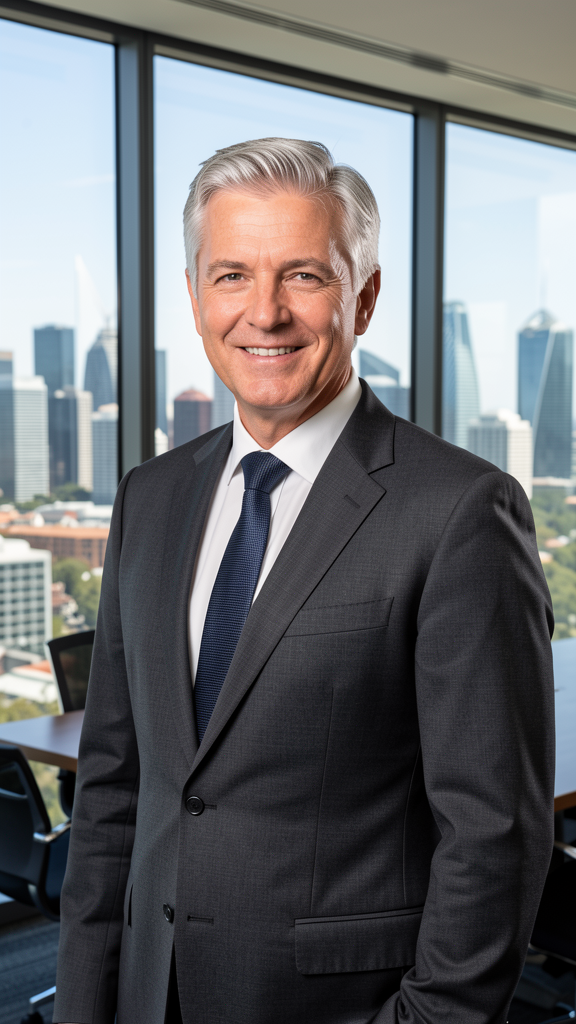
Christopher Tran
What Christopher Teaches in This Module
Under Christopher's direct instruction, students in the Signature & Handwriting Analysis module build and apply real machine learning pipelines — not theoretical exercises, but operational tooling that enhances and emboldens the forensic document examiner's conclusions.
Automated Feature Extraction
Christopher teaches systematic extraction of discriminative features from scanned exemplar documents: stroke morphology, pressure gradients, letter-form geometry, spacing distributions, and rhythm metrics. Students learn to preprocess questioned signatures through normalization, binarisation, and noise-reduction pipelines that feed directly into downstream classifiers.
Writer-Dependent & Writer-Independent Classifiers
The core of Christopher's instruction: training convolutional neural networks (CNNs) and transformer-based models to distinguish genuine signatures from forgeries. Writer-dependent models learn the specific characteristics of a single signer; writer-independent models generalise across populations. Both approaches are taught with real-world exemplar datasets and cross-validation protocols that stand up to adversarial scrutiny.
Confidence-Scoring Frameworks
Machine learning outputs are not opinions — they are probability distributions. Christopher teaches students to build calibrated confidence-scoring frameworks that quantify the likelihood of common authorship, including likelihood-ratio formulations, Bayesian evidence-weighting, and ROC-curve validation against ground-truth forgery datasets.
Adversarial Robustness Validation
A forger who understands machine learning will attempt to defeat it. Christopher demonstrates adversarial robustness testing: perturbation analysis, occlusion sensitivity mapping, and stress-testing classifiers against skilled simulation forgeries. The goal is not blind trust in AI output — it is validated, defensible augmentation of the examiner's own analysis.
Court-Ready Visual Evidence from ML Outputs
The final mile: transforming classifier outputs into exhibits that a judge and jury can understand. Christopher teaches saliency-map generation, feature-attribution visualisation (Grad-CAM, SHAP), and comparative overlay production — visual evidence that illuminates why the model reached its conclusion, rendered in formats admissible under Australian evidentiary standards.
"The machine does not replace the examiner's eye — it sharpens it. My job is to ensure every student walks out knowing how to wield these tools with precision, defend their outputs under cross-examination, and never mistake a probability for a certainty."
Methodology & Pedagogical Approach
Christopher's teaching philosophy is built on three pillars that define how machine learning is integrated into this forensic module:
1. Augmentation, Not Replacement
Every ML technique taught in this course is positioned as a tool that supports and strengthens the forensic examiner's conclusions — never as a black-box oracle that replaces human judgment. Christopher instils in every student the critical discipline of treating model outputs as one piece of evidence among many, subject to the same scrutiny as any other forensic finding.
2. Explainability Above All
A model that cannot explain its reasoning has no place in a courtroom. Christopher teaches interpretable architectures and post-hoc explanation techniques as first-class concerns, not afterthoughts. Students learn to answer the question every cross-examining barrister will ask: "Why did your algorithm reach that conclusion?"
3. Operational Realism
Every lab exercise uses real-world document conditions: low-resolution scans, partial signatures, paper texture artefacts, and degraded ink — not sanitised benchmark datasets. Christopher's pipelines are designed for the documents that actually arrive in a forensic lab, not the ones that exist in academic papers.
Tooling & Frameworks
Students in Christopher's stream work with industry-standard machine learning and computer-vision frameworks:
- PyTorch & TensorFlow — primary deep-learning frameworks for CNN and transformer model training
- scikit-learn — classical ML pipelines: SVM classifiers, random forests, and feature importance ranking
- OpenCV & scikit-image — image preprocessing, binarisation, morphological operations, and stroke extraction
- Grad-CAM, SHAP, LIME — explainability frameworks for generating court-admissible visual evidence of model reasoning
- Jupyter Lab — interactive notebook environment for iterative model development and peer review
- MLflow — experiment tracking and model registry for reproducible forensic ML pipelines
Study Under Christopher Tran
The machine learning components of Signature & Handwriting Analysis are taught exclusively by Christopher. Enrol to access his full tuteallage.
Enquire to Enrol